The Art of Pacing: Why Every Professional Podcast Needs a Stage Timer
Pacing is the difference between a boring interview and a captivating show. Discover how StageClock helps podcasters manage segments and remote guests flawlessly.
Table of Contents
The world's most successful podcasts—from The Joe Rogan Experience to Diary of a CEO—have one thing in common: they feel effortless. But behind that "effortless" vibe is a carefully managed sense of timing.
In a podcast, your biggest enemy is "The Drift." It’s when a 10-minute intro turns into 25 minutes, or a deep-dive interview goes on so long that you lose the core message.
Here is how professional podcast producers use StageClock to keep their shows on track.
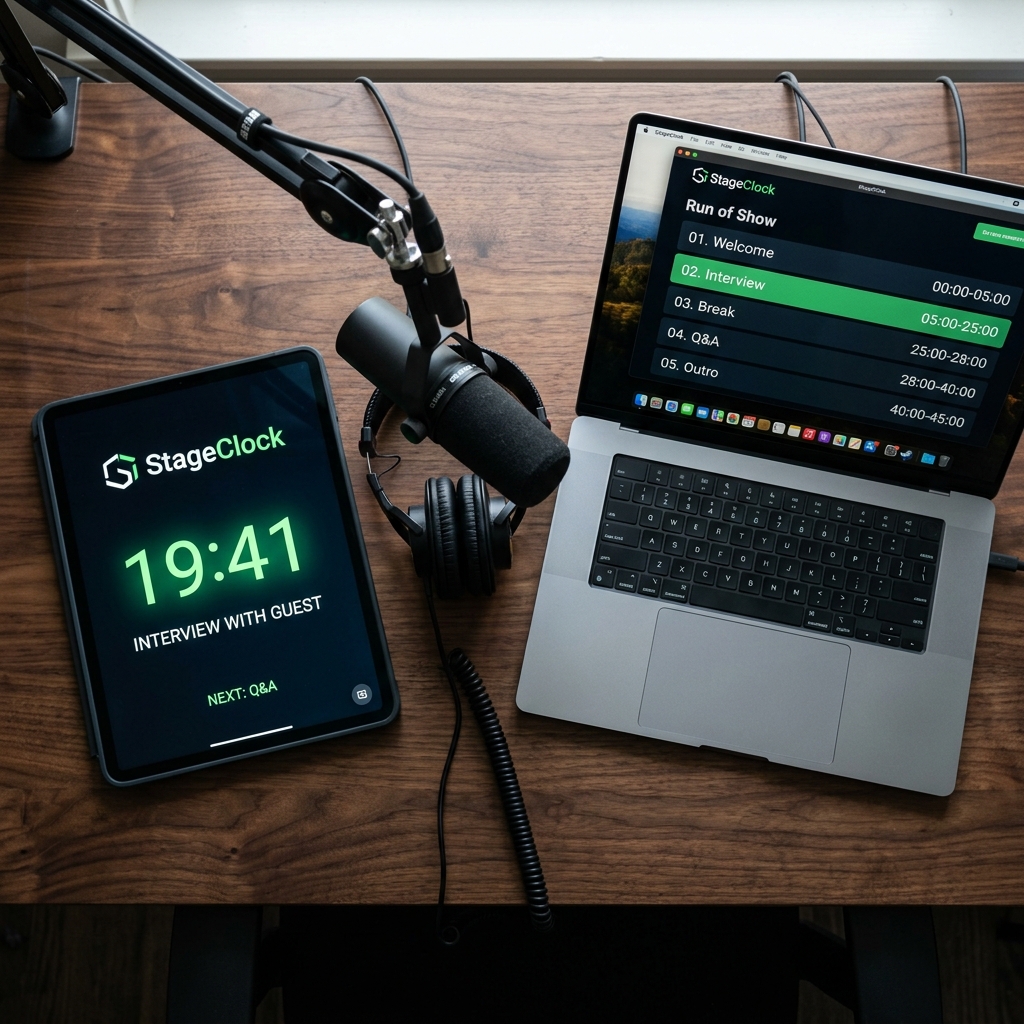
A dedicated StageClock timer and Run of Show dashboard keep the host in sync without breaking the visual flow of the video podcast.
1. Managing Show Segments
A high-quality podcast is usually broken into segments: The Hook, The Intro, The Main Topic, Mid-roll Ads, and the Outro.
- StageClock allows you to program these segments in advance.
- The host sees a countdown for each section, helping them transition naturally. "We've got 2 minutes left on this topic, let's move to the sponsor break," becomes a seamless part of the flow.
2. Remote Guest Coordination (The Latency Fix)
Hosting a guest via Zoom or Riverside? It’s hard for them to know how much time they have left to tell a story.
- The Solution: Share your StageClock Display Link with your remote guest.
- They can open it in a small window or on their phone. Now, when you signal a "wrap up," they can see exactly why, reducing the awkwardness of cutting them off mid-sentence.
3. Visual Cues for "Soft Wrap"
Podcasting is an emotional medium. You don't want a loud alarm going off.
- StageClock’s color-coded warnings (Yellow/Red) provide a silent, visual signal to the host.
- It’s a "soft nudge" that tells them it’s time to move to the next question, keeping the energy high and the listener engaged.
4. Reducing Post-Production Time
The more you stay on schedule during the recording, the less you have to "fix in post."
- If you hit your segment marks correctly, your editor doesn't have to spend hours cutting out 15 minutes of rambling. StageClock pays for itself in the time saved during the editing phase.
5. Professionalism for High-End Guests
When you bring a high-profile guest onto your show, showing them that you have a professional timing system sends a message: "We respect your time, and we run a professional operation." It builds trust and ensures they’ll want to come back.
Starting a new season? Integrate StageClock into your studio and master the art of pacing.