The 12-Hour Summit: How StageClock Kept a Global Event on Track
Managing a 24-hour virtual event across 10 time zones? Here is how one team used StageClock to stay perfectly synchronized.
Table of Contents
Virtual summits are a nightmare for scheduling. You have speakers in London, attendees in New York, and a production team in Singapore. If your clock is even slightly off, your whole stream becomes a disaster of "awkward waiting" or "missing the intro."
One of our users recently ran a 12-hour global summit with zero timing errors. Here is how they did it with StageClock.
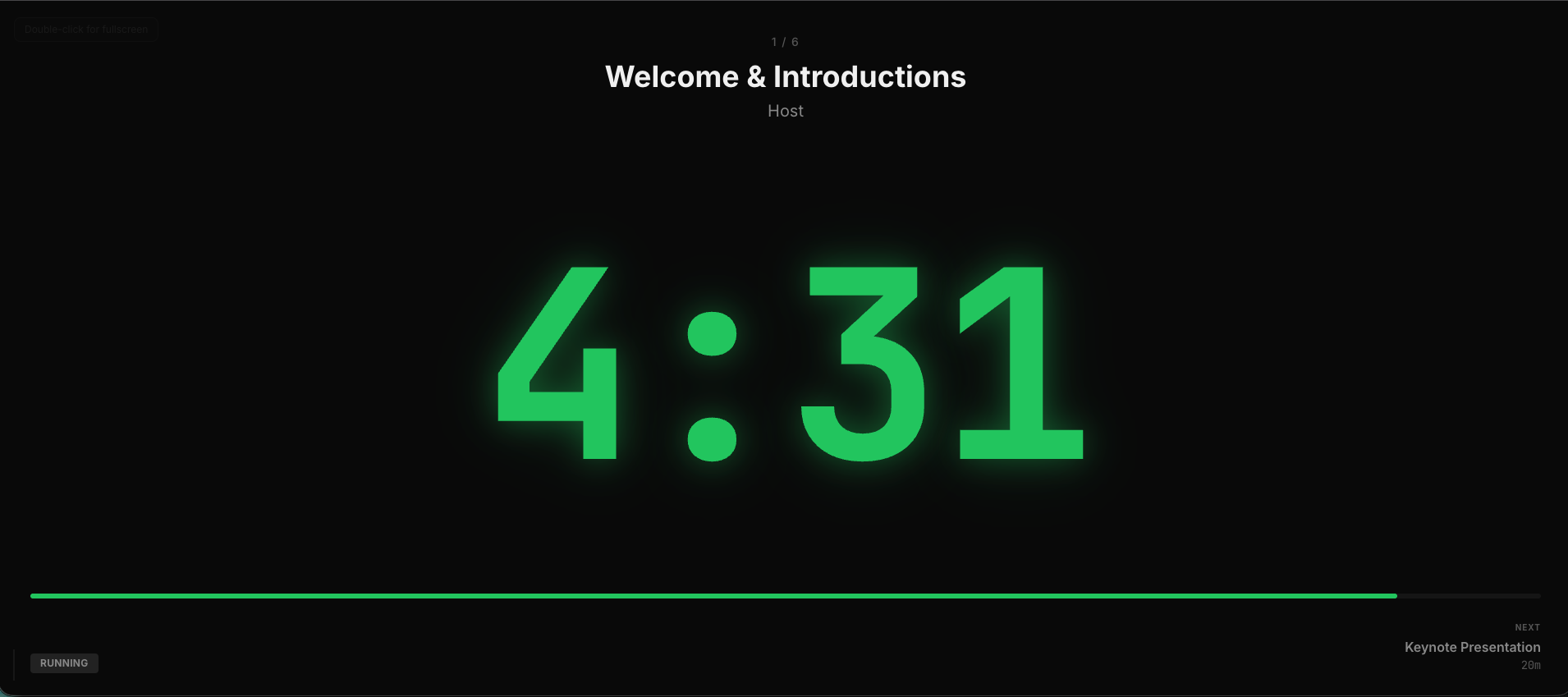
Even across thousands of miles, every speaker saw the exact same countdown.
The Problem: The "Zoom Lag"
When you use the timer built into a streaming app, there's often a 5-10 second delay. If the producer says "You're live in 3... 2... 1...", the speaker might not hear it for several seconds.
The Solution: Independent Timing
The team used StageClock as a "Secondary Source of Truth."
- Every speaker had a StageClock tab open on their secondary monitor.
- The producer controlled the timer from the main hub.
- The result: Every speaker knew exactly when their time started and ended, independent of the stream delay.
Why This Worked
- Reliability: Even if the video stream lagged or buffered, the StageClock timer remained rock-solid.
- No More Shouting: The producer used the "Private Message" feature to tell speakers "You're on in 60 seconds" without having to interrupt their focus.
- Perfect Hand-offs: Transitions between speakers were crisp and professional, making the 12-hour event feel like a high-budget TV production.
Whether your event is in a physical ballroom or on a global stage, StageClock gives you the tools to stay perfectly on time.
Ready for your next big show? Scale your production with StageClock.